


Complete Investment Guide for Florida Homeowners
What You Can Expect to Pay for a Complete System Replacement
A complete HVAC system replacement in Fort Myers typically ranges from $5,200 to $14,500, with most homeowners investing between $7,000 and $10,500 for a quality mid-tier system. This range reflects the full scope of equipment and labor required to install a functioning heating and cooling solution in a typical Southwest Florida home.
The wide price variance stems from several core factors: system efficiency rating, brand reputation, cooling capacity measured in tonnage, and whether your home requires ductwork modifications. A basic 2.5-ton, 14 SEER split system with straightforward installation in a 1,400-square-foot home may land closer to the lower end, while a 4-ton, 18 SEER variable-speed unit serving a 2,800-square-foot residence with zoned ductwork and smart controls will push toward the upper range.
Fort Myers presents unique pricing considerations that differ from inland Florida markets. Coastal humidity accelerates wear on cooling coils and condensate systems, prompting many homeowners to invest in corrosion-resistant cabinet coatings and upgraded drain pan materials that add $250 to $600 to base pricing. Summer demand surges between May and August can also influence installation availability and labor rates, as Fort Myers area contractors schedule back-to-back projects during peak cooling season.
Single-stage systems represent the most budget-friendly option, cycling on and off at full capacity. Two-stage units offer improved humidity control and energy savings by running at lower speeds during moderate conditions, adding roughly $800 to $1,400 to system cost. Variable-speed models deliver the highest efficiency and comfort but command a premium of $1,800 to $3,200 over single-stage equivalents. Given Fort Myers’ extended cooling season that runs nearly nine months annually, the incremental investment in higher-efficiency equipment often pays back through reduced utility bills within five to seven years, particularly for homes exceeding 2,000 square feet or those with poor insulation.
How Equipment Selection Shapes Your Investment
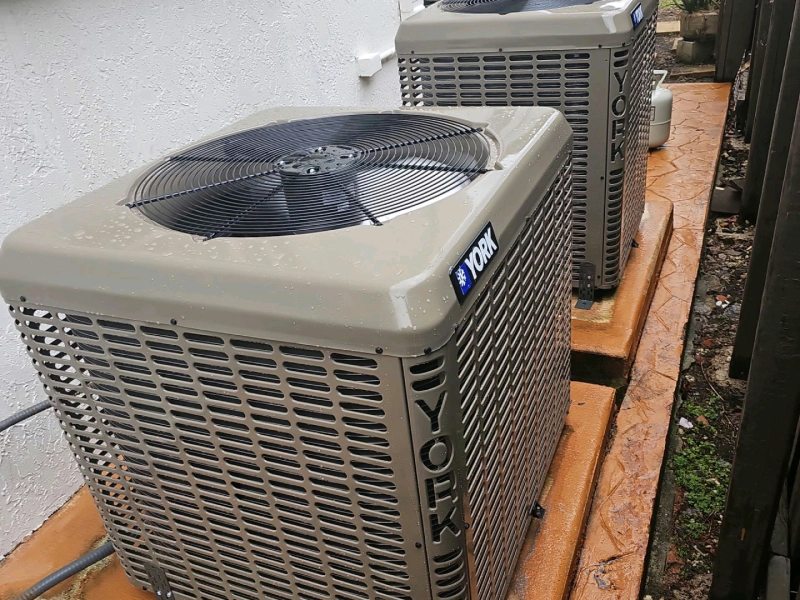
Split systems dominate Fort Myers installations due to their reliability and cooling performance in humid climates. These configurations pair an outdoor condensing unit with an indoor air handler or furnace, moving refrigerant between components to cool or heat your home. For a quality ac installation service, expect to invest $5,800 to $9,200 for a 2.5- to 3-ton split system with a 15 to 16 SEER rating, including labor and basic materials. Premium brands with 18+ SEER ratings and advanced features like variable-speed compressors push costs to $9,500 to $13,000.
Packaged units consolidate all components into a single rooftop or ground-level cabinet, simplifying installation in homes without interior space for separate air handlers. These systems cost $6,200 to $10,800 installed, with pricing influenced by tonnage and whether the package includes electric heat strips or a gas furnace. Packaged systems suit slab-foundation homes common in Fort Myers subdivisions built in the 1980s and 1990s, where attic access is limited.
Ductless mini-split systems offer targeted cooling for room additions, converted garages, or homes without existing ductwork. Single-zone ductless units start at $3,400 to $5,600 installed, while multi-zone configurations serving three to four rooms range from $8,200 to $14,000. Ductless installations have grown popular in historic Fort Myers neighborhoods where adding traditional ductwork would require extensive retrofitting.
Capacity sizing directly impacts price and performance. Undersized systems run continuously without achieving comfort, while oversized units cycle rapidly and fail to dehumidify effectively. Fort Myers homes typically require 400 to 500 square feet of cooling per ton of capacity, adjusted for ceiling height, insulation quality, window orientation, and shade cover. A 1,600-square-foot home with standard insulation generally needs a 3-ton system ($6,800 to $9,500), while a poorly insulated 2,400-square-foot residence may require a 5-ton unit ($8,900 to $12,400). Professional load calculations using Manual J methodology ensure proper sizing, preventing costly comfort issues and premature equipment failure.
Labor Factors That Influence Your Final Bill
Labor accounts for 35% to 50% of total project cost, with Fort Myers installation crews typically charging $2,200 to $5,500 depending on system complexity and site conditions. Standard replacements in homes with accessible attics, clear condensate drain paths, and compatible electrical service fall toward the lower end, while challenging installations involving crawl space work, electrical panel upgrades, or structural modifications push labor costs higher.
Single-story homes with unobstructed outdoor placement for condensing units and straightforward indoor air handler access represent the most cost-effective scenarios. Two-story homes often require additional refrigerant line length, larger condensate pumps to lift drainage vertically, and more complex ductwork routing, adding $400 to $900 in labor. Tile or metal roofs common in Fort Myers complicate rooftop package unit installations, sometimes requiring specialized flashing and mounting hardware that increases labor by $300 to $700.
Electrical requirements significantly affect installation cost. Modern high-efficiency systems draw less amperage than older units, but homes built before 1990 may still need panel upgrades or dedicated circuit installation to meet current electrical codes. Upgrading a 100-amp panel to 200-amp service costs $1,400 to $2,800, while adding a single dedicated 240-volt circuit runs $350 to $650. Lee County permitting and inspection fees add $180 to $350 to projects, with costs varying based on system size and scope of electrical work.
Condensate drainage presents unique challenges in Fort Myers’ flat topography and high water tables. Gravity drains work when air handlers sit above exterior grade, but many installations require condensate pumps ($180 to $320 installed) to move moisture away from the home. Homes with finished ceilings or complex floor plans may need extended PVC drain runs, increasing material and labor costs by $150 to $400. Proximity to existing drain access points or exterior walls reduces installation time and expense, while homes requiring long drain runs through interior walls face higher bills.
Beyond the Equipment: Components That Drive Total Investment
Ductwork condition profoundly affects system performance and long-term operating costs. Homes with damaged, undersized, or poorly sealed ducts lose 20% to 40% of conditioned air before it reaches living spaces, forcing systems to work harder and driving up utility bills. A complete duct service replacement in a 1,800-square-foot Fort Myers home costs $2,800 to $5,400, while partial repairs and sealing range from $600 to $1,800. Older homes with flex duct sagging in attics or metal ductwork corroded by condensation often benefit from full replacement during system upgrades.
Professional duct cleaning service removes accumulated dust, mold spores, and debris that restrict airflow and degrade indoor air quality. Fort Myers’ humidity encourages microbial growth in ductwork, particularly in systems that have not received regular maintenance. Whole-home duct cleaning costs $450 to $800 and should be performed before new equipment installation to prevent contamination transfer to fresh coils and blowers.
Thermostat upgrades enhance comfort and efficiency. Basic programmable models start at $120 to $220 installed, while Wi-Fi-enabled smart thermostats with remote access, learning algorithms, and humidity control range from $280 to $480 installed. Advanced zoning systems that independently control temperatures in different home areas cost $1,800 to $3,600 for two to four zones, delivering substantial comfort improvements in multi-story or large floor-plan homes.
Air quality enhancements address Fort Myers’ allergen and humidity challenges. Whole-home dehumidifiers cost $1,400 to $2,800 installed and maintain optimal indoor humidity even during rainy season, protecting furnishings and preventing mold growth. UV light air purifiers ($500 to $900 installed) neutralize airborne pathogens circulating through ductwork, while high-efficiency media filters ($80 to $180 per replacement) capture fine particulates standard filters miss. Upgrading to a variable-speed air handler enables better humidity control by running longer cycles at lower speeds, removing more moisture per cooling cycle than single-speed units.
Warranty coverage varies significantly across brands and contractors. Standard manufacturer warranties cover parts for five to ten years, while extended labor warranties ($400 to $900) protect against service call charges for mechanical failures. Some contractors bundle maintenance agreements ($180 to $350 annually) that include seasonal tune-ups, priority scheduling, and discounted repairs, helping preserve system efficiency and catch problems before they become expensive failures.
How to Plan Your Investment and Choose the Right Solution
Start by establishing a realistic budget that accounts for both equipment and long-term operating costs. While lower-priced systems reduce upfront investment, they often carry higher utility bills and shorter lifespans. Calculate total cost of ownership over ten years, factoring in estimated energy consumption based on SEER ratings, anticipated repair frequency, and warranty coverage. A $6,500 system with 14 SEER efficiency may cost $1,200 annually to operate in a Fort Myers climate, while a $9,800 system with 18 SEER efficiency might run $850 per year, delivering $3,500 in savings over a decade that partially offsets the higher purchase price.
Request detailed written estimates from multiple licensed contractors, ensuring quotes include equipment model numbers, SEER ratings, warranty terms, and a complete scope of work covering electrical connections, condensate drainage, refrigerant line installation, thermostat, and startup testing. Avoid estimates that lump costs into vague categories or omit critical details like permit fees and ductwork assessment. Legitimate hvac services providers conduct in-home evaluations, measure existing ductwork, assess electrical capacity, and perform Manual J load calculations before quoting, rather than offering instant prices over the phone.
Financing options make quality systems accessible without depleting emergency savings. Many contractors partner with lending programs offering 0% interest for 12 to 24 months or extended terms with competitive rates. Compare total finance charges across offers, and verify there are no prepayment penalties if you plan to pay off balances early. Utility rebate programs occasionally incentivize high-efficiency installations; check with local providers for current offers that reduce effective system cost.
Timing your purchase strategically can yield savings. Shoulder seasons in March through April and October through November see lower contractor demand than peak summer months, sometimes translating to more flexible scheduling and negotiating room on pricing. However, waiting until an emergency failure forces hasty decisions often costs more than planning a replacement when your existing system shows declining performance or reaches 12 to 15 years of service life.
When you are ready to move forward with a properly sized, efficiently installed system tailored to Fort Myers’ demanding climate, contact us for a transparent quote based on your home’s specific requirements. Our licensed team conducts thorough assessments, explains all cost factors clearly, and delivers reliable installations backed by solid warranties and ongoing support.